What are the 7 development trends forecast of smart home in 2021?
By Ivan
May 2nd, 2021
159 views
What are the 7 development trends forecast of smart home in 2021?
Abstract: In recent years, various products with smart home labels and the future home environment have been hyped to a certain extent, but smart homes have become more and more mature. The following are the seven main trends of smart home development predicted by the survey agency in 2021.
In recent years, various products with smart home labels and the future home environment have been hyped to a certain extent, but smart homes have become more and more mature. More importantly, smart speakers have been prepared for higher-level smart home applications, thereby prompting buyers to need more smart home devices and forming scene linkage.
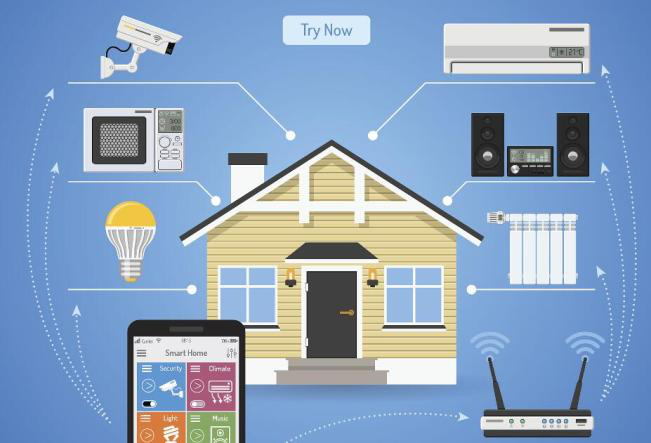
Ten years ago, remote control of lights, thermostats, and security systems at home via mobile phones seemed to be a scene that only appeared in the most advanced science fiction novels. However, 2017 will eventually become the era of smart homes. Zion market research company predicts that by 2022, innovation in the smart home market will reach 53.45 billion US dollars.
The following are the seven main trends of smart home development predicted by the survey agency in 2021:
Homeowner data sharing
Providing companies with information about property owners may be the next big thing in smart home innovation. It is not too far away to let the refrigerator order the food you need or set the lights and the right temperature for your arrival. The information shared with smart devices will be of particular interest to companies building such products.
Intelligent Building
Intelligent building automation systems for buildings will soon be applied on a large scale, and their scale will exceed that of ordinary houses. You may even find them in larger structures and in the context of Industry 4.0, although it will be integrated with other standards. There are more standards and overlaps that can be really used in different settings, including home automation, but not exclusively.
Pay more attention to customer experience
Smart home companies will evaluate customer experience through the Internet. Communication service providers, media organizations, and smart device manufacturers all need to evaluate customer experience. They can also discover how their services face competitors and how customers choose suppliers.
More connections
WiFi 6 will dominate in the next few years. In other words, individuals will always need the next best thing (5G), but this does not mean that it will provide impetus for development. 802.11ax bandwidth can increase the security capacity and data rate. Facts have proved that property owners are resolute purchasers of bandwidth. What they need is more connections and a faster transmission experience.
Enhanced control, efficiency and customization
Artificial intelligence will bring disruptive innovation to our home environment. Innovation will become more humane, and we can choose to control everything from tools to wireless power to safety from a central location. Indeed, with the creation of AI, we ultimately do not need to physically control anything, because these devices will automatically adapt to our needs.
Users prefer brand certification
Consumers are also beginning to realize the importance of brand certification. These experiences can help service providers and suppliers increase the attractiveness of connected home products, but Gartner's Amanda Sabia stipulates that it should go beyond the scope of early adopters and observe the reasons that drive these early adopter customers to buy more solutions.
Gartner’s Jessica Ekholm recommends that connected home solution providers zero the true value proposition of a fully connected home environment, which means gadgets, experience and services, and focus on solving daily tasks.
Increased failure rate
Failures will be transferred between various gadgets. So far, most home connection problems (75-90%) are concentrated around home switches and wifi signals. As routers become better and more suitable, problems will decrease relatively. However, as more and more people choose to work at home, and the number of smart home devices increases, there will be more and more annoying faults. At this time, it is also a great test of the capabilities of smart home suppliers and service providers.
Previous
Why do we use smart door lock nowadays?
Read More
Next
what are the trends of smart home security?
Read More


